

World’s Strongest Currencies Ranked:Trading High-Value Forex Pairs
Understanding the Relative StrengthIndex (RSI)

Mastering Bull and Bear Markets: APractical Guide for Traders
bet365 Casino Games & Slots Apps on Google Play
World’s Strongest Currencies Ranked:Trading High-Value Forex Pairs

Have you ever wondered which currencies hold the most value globally? A currency’s strength is influenced by factors such as political stability, economic performance, monetary policy, and trade relationships.
In this article, we explore some of the world’s strongest currencies, using the US dollar (USD) as a reference point.
Understanding these currencies can help traders better assess market dynamics and identify potential opportunities in the global forex market.
What Determines a Strong Currency?
A “strong” currency is typically one that has a high exchange value relative to others, often supported by:
- Stable political and economic systems
- Strong export sectors (such as oil, finance, or manufacturing)
- Conservative monetary policy
- Investor confidence and reserve demand
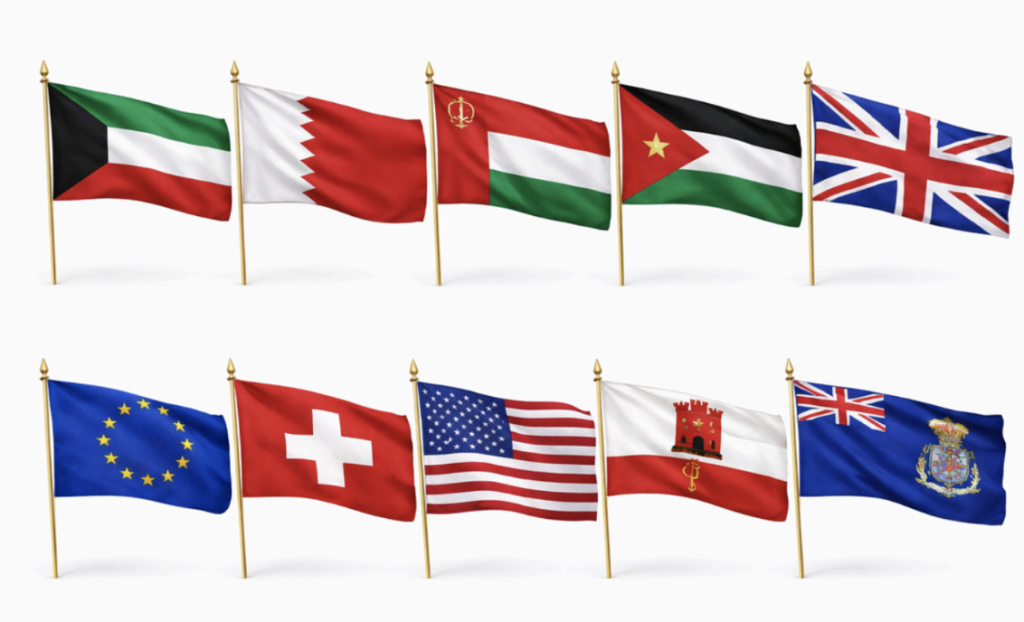
World’s Strongest Currencies (Ranked)
1. Kuwaiti Dinar (KWD)
- Introduced in 1960
- Backed largely by Kuwait’s oil-driven economy
- Approximately 1 USD ≈ 0.30 KWD
- Known for long-term stability and controlled supply
2. Bahraini Dinar (BHD)
- Introduced in 1965
- Pegged to the US dollar
- Supported by oil and gas exports
- 1 USD ≈ 0.38 BHD
3. Omani Rial (OMR)
- Divided into 1,000 baisa
- Supported by oil revenues and fiscal controls
- 1 USD ≈ 0.38 OMR
- Nearly double the value of the British pound
4. Jordanian Dinar (JOD)
- Introduced in 1950
- Pegged to the US dollar
- 1 USD ≈ 0.71 JOD
- One of several high-value Middle Eastern currencies
5. British Pound Sterling (GBP)
- Supported by a diversified economy
- Key global reserve and trading currency
- 1 USD ≈ 0.75 GBP
- Popular among forex traders due to liquidity
6. Gibraltar Pound (GIP)
- Exchangeable at face value with GBP
- Benefits from Gibraltar’s role as a financial centre
- 1 USD ≈ 0.81 GIP
7. Cayman Islands Dollar (KYD)
- Backed by the major financial services sector
- Widely used in offshore finance
- 1 USD ≈ 0.83 KYD
8. Euro (EUR)
The euro is one of the most widely used currencies in the world.
- Official currency of 19 EU countries
- Second only to the USD in global trading volume
- 1 USD ≈ 0.90 EUR
- Heavily influenced by ECB policy and regional economics
9. Swiss Franc (CHF)
- Supported by Switzerland’s political neutrality
- Strong financial and banking sector
- 1 USD ≈ 0.98 CHF
- Often sought during periods of market uncertainty
10. US Dollar (USD)
- World’s primary reserve currency
- Involved in over 80% of global forex trades
- Central to global trade, commodities, and finance
Trading Strong Currencies with BWG
BWG provides access to global forex CFDs, allowing traders to analyse and trade major and minor currency pairs through MetaTrader 5 (MT5). With professional charting tools, real-time pricing, and advanced order execution, MT5 supports both technical and fundamental analysis when trading some of the world’s strongest currencies.
Whether you are exploring forex markets for the first time or refining an existing strategy, understanding currency strength is important for informed, disciplined CFD trading.
Frequently Asked Questions (FAQs)
What does it mean to trade strong currencies?
Trading strong currencies involves analyzing and trading currency pairs where one currency shows relative strength against another, often driven by economic performance, interest rates, or market sentiment.
Can I trade strong currencies using CFDs?
Yes. With BWG, traders can trade strong currencies through forex CFDs, allowing them to speculate on price movements without owning the underlying currencies.
What platform does BWG use for forex CFD trading?
BWG provides access to forex CFD trading through MetaTrader 5 (MT5), which offers advanced charting, real-time pricing, and risk management tools to support informed trading decisions.
What are forex CFDs?
Forex CFDs (Contracts for Difference) allow traders to speculate on the price movements of currency pairs without owning the underlying currencies. Profits or losses are based on the difference between the opening and closing prices of a trade.
Can I trade both major and minor currency pairs with BWG?
Yes. BWG provides access to both major and minor currency pairs through forex CFDs, giving traders exposure to a wide range of global markets.