

Trade Indices
Access major global stock indices with competitive spreads and fast execution.
Start Trading
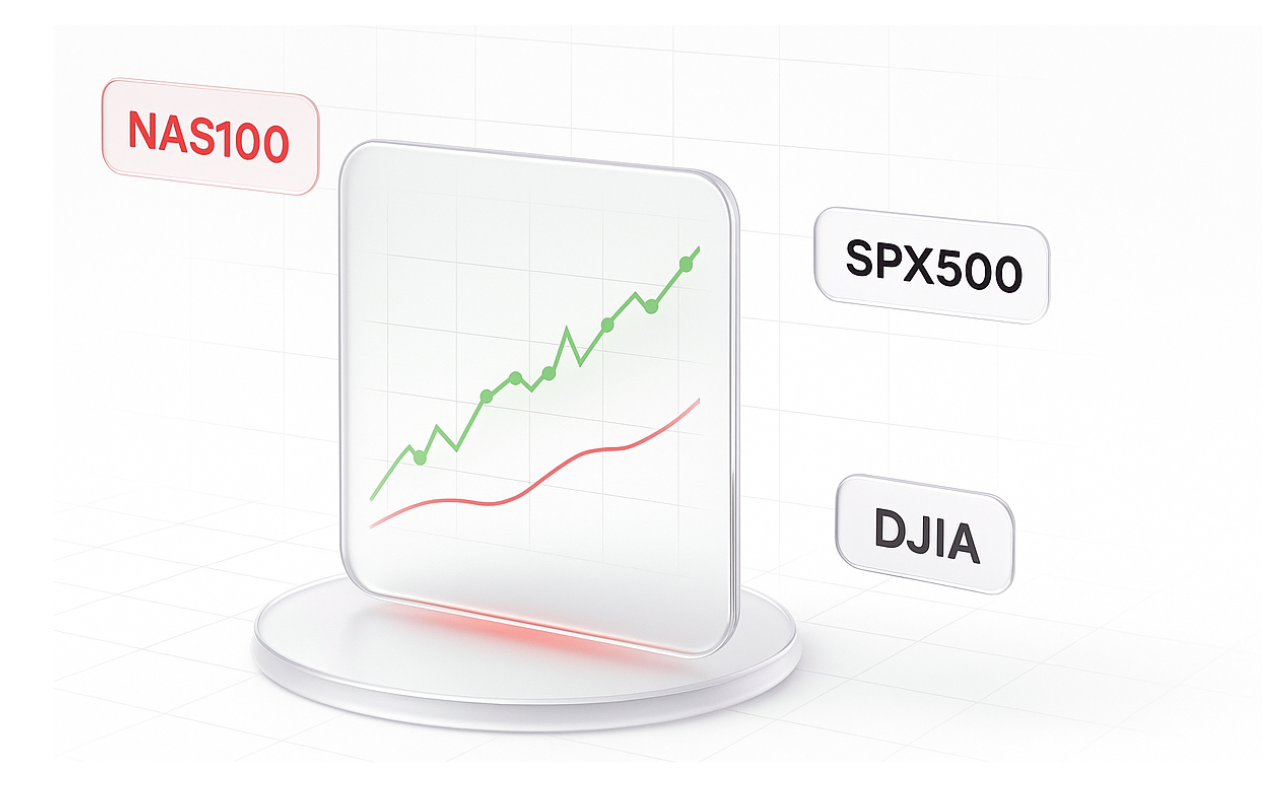
Trade the world’s top stock indices and track the performance of leading global companies with ease. Index CFDs give you low-cost access to major markets like the S&P 500, Nasdaq, and FTSE, allowing you to speculate on rising or falling prices without owning the underlying stocks. It’s an efficient way for beginners to gain exposure to a diversified basket of shares. Start your investing journey today.
A stock index measures the combined value of a select group of companies, providing a quick overview of the overall market performance. With Index CFDs, you trade the price movement of the index rather than the assets themselves, with profits or losses based on the difference between your entry and exit.
Index CFDs cover key markets worldwide, enabling traders worldwide to tap into global trends easily.
Unlock these Powerful Benefits with Best Wing Global
Effortless Access to Global Indices CFDs
Why Trade Indices with
Best Wing Global?
Traders can tap into global index market movements through major indices, which are offered with competitive leverage on our platform.
- Access major global indices
- Gain diversified market exposure
- Trade overall market trends, not individual stocks
- Utilize leverage up to 1:500
- Benefit from extended trading hours
- Enjoy low trading costs
- Use professional-grade trading tools
Frequently Asked Questions
1. What are indices in trading?
Indices are market benchmarks that track the performance of a group of stocks. Examples include the S&P 500, the NASDAQ 100, the FTSE 100, and the Nikkei 225. When you trade index CFDs, you’re speculating on whether the index will rise or fall, without owning the underlying stocks.
2. What are the trading hours for indices?
Trading hours vary by index, but most major indices follow their respective exchange sessions.
For example:
- US indices (S&P 500, Dow Jones, NASDAQ): Typically open for long hours, overlapping US trading times.
- European indices (DAX, FTSE): follow European market hours.
Your broker’s platform will display the exact trading times for each index CFD.
3. How do I trade indices?
To trade indices, open an account with a regulated broker that offers index CFDs. Select an index such as the S&P 500 or NASDAQ 100, then use technical or fundamental analysis to anticipate its direction. You can go long (buy) if you expect the index to rise or go short (sell) if you believe it will fall. Always apply risk-management tools, such as stop-loss orders, to protect your positions.
4. Are indices suitable for beginners?
Yes, indices can be suitable for beginners because they represent a broad basket of stocks rather than a single company, which reduces the impact of individual price swings. They tend to be less volatile than individual stocks and often follow clearer long-term trends. However, beginners should still understand the basics of the market, employ proper risk management, and start with small positions when trading index CFDs.
5. How do I manage risk when trading indices?
Manage risk by setting stop-loss and take-profit orders, using small position sizes, and avoiding excessive leverage. Keep a close eye on major economic events, trade with a clear strategy, and regularly review your positions. Staying disciplined helps protect your capital during market volatility.
1.
Register Account
Open your account in minutes and start trading instantly.