
Common Trading Mistakes Beginners Make
Learn how new traders can avoid common mistakes and build smarter habits for long-term consistency.
Introduction
Many people begin trading with excitement, motivation, and the goal of growing their money. While markets can create opportunity, many beginners struggle because they repeat the same common trading mistakes.
These mistakes are usually not caused by lack of effort. They often come from emotional decisions, unrealistic expectations, poor planning, or weak risk management. The good news is that most of them can be corrected with stronger habits.
Learning what to avoid can often improve results faster than searching for a perfect strategy.
Why Mistakes Hurt Beginners
New traders often focus only on finding winning trades. However, long-term success usually depends more on avoiding costly mistakes than chasing quick profits.
A trader who protects capital, controls emotions, and follows a clear process often has a stronger chance of improving over time.
Trading Without a Plan
One of the most common beginner mistakes is entering trades without clear rules. Many people trade because of headlines, social media tips, or emotion.
A trading plan should include entry conditions, exit strategy, risk per trade, preferred markets, and daily limits. Without structure, decisions become random and inconsistent.
Traders who follow a plan usually make calmer and smarter decisions during changing market conditions.
Risk Management Mistakes
Poor risk management is one of the most expensive trading mistakes. Some traders risk too much on one position or avoid using stop losses completely.
No trader wins every trade. Protecting capital helps traders survive losing periods and continue learning long enough to improve.
Many experienced traders focus first on limiting downside risk before chasing upside reward.
Emotional Trading
Fear may cause traders to close profitable trades too early. Greed may cause traders to hold positions too long or increase size unnecessarily.
Frustration after losses may also lead to revenge trading, where poor setups are taken simply to recover money quickly.
Emotional decisions often create inconsistency. Discipline usually creates better long-term results.
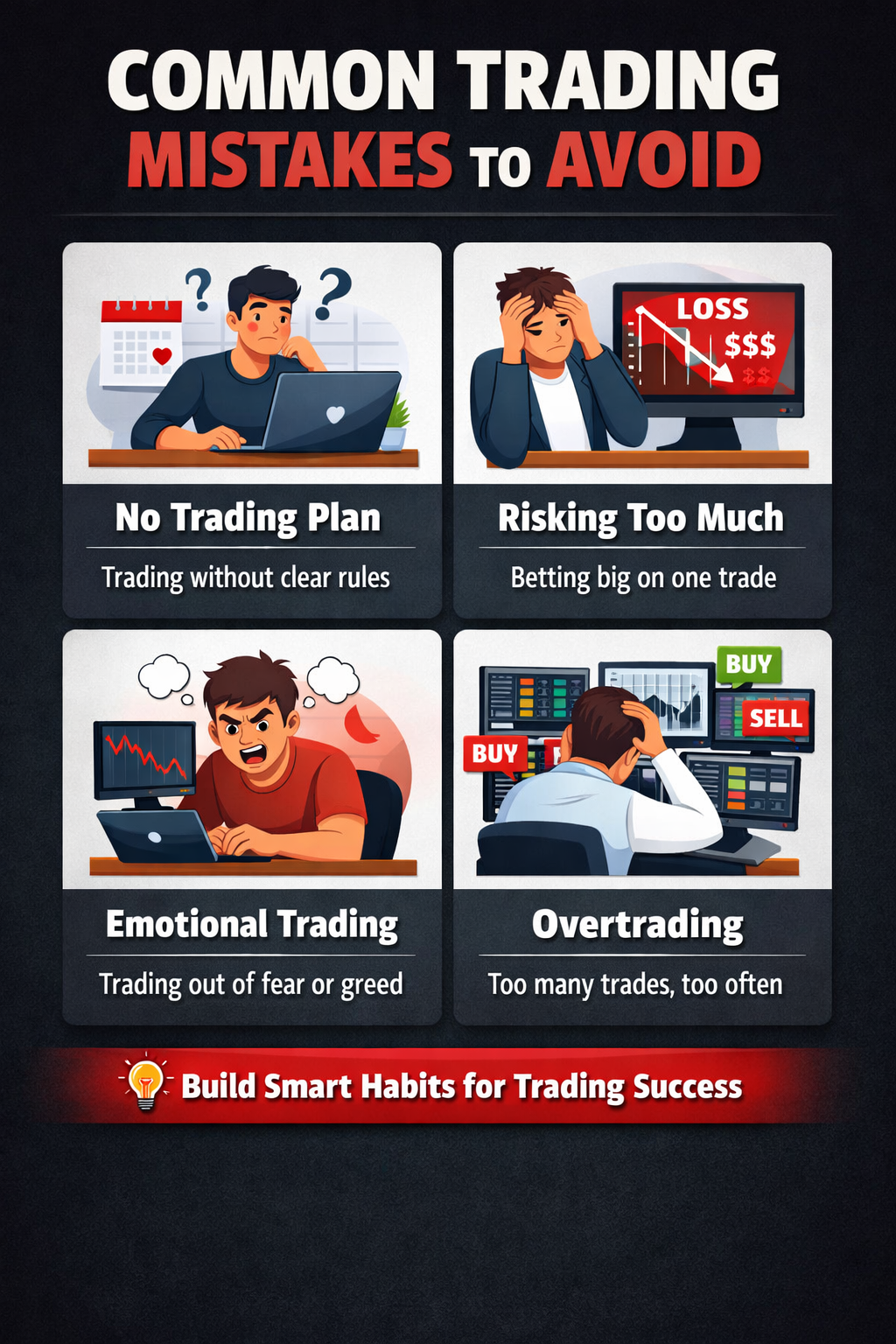
Common trading mistakes such as poor planning, emotional decisions, overtrading, and weak risk management can slow long-term progress. Avoiding these beginner trading mistakes often improves consistency faster than searching for perfect entries.
Overtrading
Many beginners believe more trades mean more profit. Often the opposite happens.
Too many trades can lead to poor entries, higher costs, reduced focus, and mental fatigue. Sometimes the best trade is no trade at all.
Patience can be one of the strongest advantages a trader develops.
Leverage Mistakes
Leverage can be useful, but beginners often misuse it by opening oversized positions.
Even small market moves can create larger losses when leverage is too high. Using smaller size while learning often gives traders more time to improve skill and confidence.
How to Avoid Mistakes
- Use smaller position sizes
- Follow one strategy
- Use stop losses
- Keep a trading journal
- Review mistakes regularly
- Stay patient
- Think long term
Consistency usually beats intensity. Strong habits built over time often lead to stronger performance.
Final Thoughts
Every trader makes mistakes in the beginning. The key is learning early and turning mistakes into lessons instead of habits.
At Best Wing Global Academy, we believe discipline, education, and smart risk management are the foundation of long-term trading success. Avoiding common trading mistakes can be one of the smartest first steps any beginner takes.
Learn Smarter With Best Wing Global Academy
Build stronger trading habits with practical education, beginner guidance, and professional risk management principles.

Mastering Bull and Bear Markets

Forex vs Stocks

What Is CFD Trading?