Home / Guides / Mastering Bull and Bear Markets: A Practical Guide for Traders
Mastering Bull and Bear Markets: A Practical Guide for Traders
Share
Jan 25, 2026
Financial markets move in cycles, commonly described as bull and bear markets. These phases reflect shifts in price trends, sentiment, and economic conditions, and they influence how traders approach risk, opportunity, and strategy.
Understanding how bull and bear markets behave and how to adapt to each helps traders remain disciplined across changing market conditions.
Understanding Bull Markets
A bull market is characterised by sustained price increases, generally defined as a rise of 20% or more from recent lows.
Key Characteristics
Rising asset prices over an extended period
Strong investor confidence and optimism
Increasing trading activity and liquidity
Often aligned with economic growth and stable macro conditions
Phases of a Bull Market
Accumulation Phase – Early positioning by informed participants
Public Participation Phase – Broader market engagement as sentiment improves
Excess Phase – Heightened speculation and risk of overvaluation
Bull markets often reward trend-following and momentum-based strategies, but they also require caution as optimism peaks.
Understanding Bear Markets
A bear market occurs when prices decline by 20% or more from recent highs, usually accompanied by negative sentiment.
Key Characteristics
Prolonged price declines
Reduced confidence and increased risk aversion
Lower liquidity and trading activity
Frequently linked to economic slowdown or uncertainty
Phases of a Bear Market
Distribution Phase – Early exits by experienced market participants
Panic Phase – Accelerated selling triggered by negative events
Capitulation Phase – Widespread pessimism, often near market lows
Bear markets present challenges, but they can also offer opportunities for traders who understand downside strategies and risk control.
Market Corrections: The Middle Ground
Market corrections are short-term declines of around 10% and can occur in both bull and bear markets.
Help reset excessive valuations
Often driven by technical, fundamental, or sentiment shifts
Do not necessarily signal a full trend reversal
Distinguishing between a correction and a broader trend change is essential for avoiding premature exits.
Trading Strategies Across Market Conditions
Bull Market Approaches
Trend-following strategies
Breakout trading during strong momentum
Momentum-based indicators to identify outperforming assets
Bear Market Approaches
Short-selling strategies
Defensive positioning
Relative-strength and pair-based approaches
Range-Bound or Choppy Markets
Support and resistance trading
Mean-reversion strategies
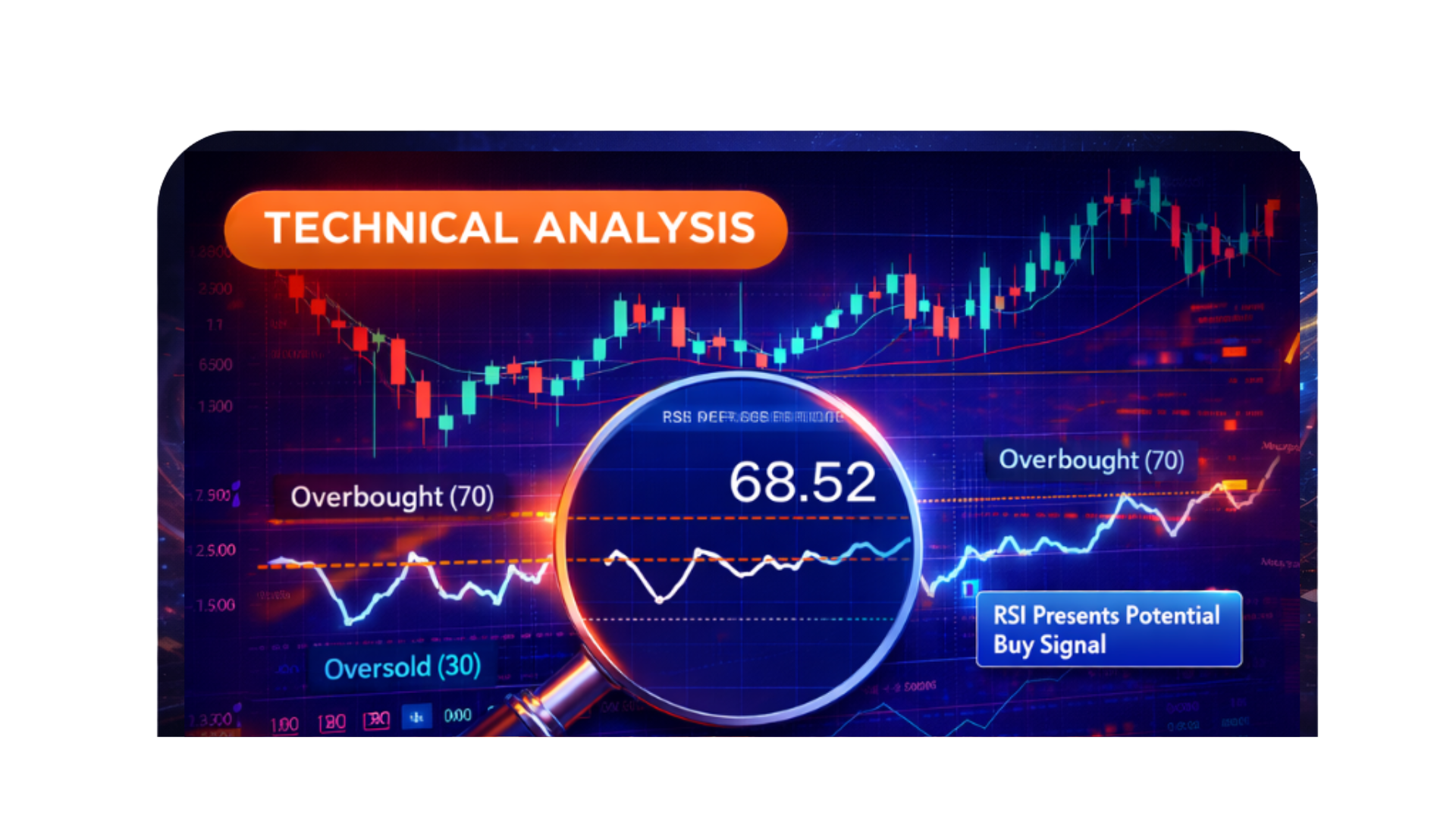
Momentum oscillators, such as RSI, for timing entries
No single strategy works in all conditions. Flexibility and adaptation are key.
Bull and Bear Markets Across Asset Classes
Forex: Currency pairs experience cycles driven by interest rates, economic strength, and geopolitical factors
Commodities: Supply-demand imbalances and geopolitical events can drive independent cycles
Cryptocurrencies: Often exhibit shorter, more volatile bull and bear phases
Overview of how different asset classes, including forex, commodities, and cryptocurrencies, move through bull and bear market cycles influenced by macroeconomic and market-specific factors.
The Psychology Behind Market Cycles
Market movements are heavily influenced by human behaviour.
Fear of missing out (FOMO)
Loss aversion
Confirmation bias
Overconfidence after success
Developing emotional discipline through planning, journaling, and consistency helps traders manage decision-making during both optimism and fear.
Risk Management in Bull and Bear Markets
Effective risk management remains critical in all market environments.
Controlled position sizing
Use of stop-loss and take-profit levels
Maintaining favourable risk-reward ratios
Diversifying exposure across markets or strategies
Risk management is not about avoiding losses, but about controlling them.
Looking Ahead: Adapting to Market Evolution
Markets continue to evolve with advancements in technology, data analysis, and global participation. While tools and platforms improve, the core principles remain unchanged.
Final Thoughts
Bull and bear markets are natural parts of the financial cycle. Successful trading is not about predicting which phase comes next, but about being prepared to operate effectively in any market condition.
By combining market awareness, adaptable strategies, and disciplined risk management on MT5, traders can approach changing market environments with greater confidence when trading with Best Wing Global.
Frequently Asked Questions (FAQs)
Yes. Bull markets may favour trend-following and momentum strategies, while bear markets can offer opportunities through short selling and defensive strategies. Success depends on strategy selection, discipline, and risk management.
A correction is typically a short-term decline of around 10%, while a bear market involves a broader drop of 20% or more, accompanied by sustained negative sentiment. Context, duration, and economic conditions help distinguish between the two.
Market conditions can change quickly. Effective risk management, such as controlled position sizing, stop-loss orders, and favourable risk-reward ratios, helps protect capital and supports long-term trading consistency.





 Jan 25, 2026